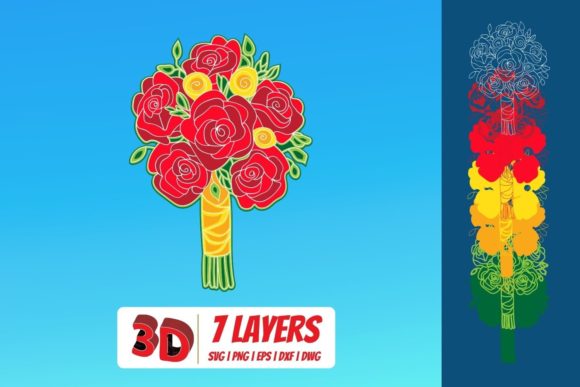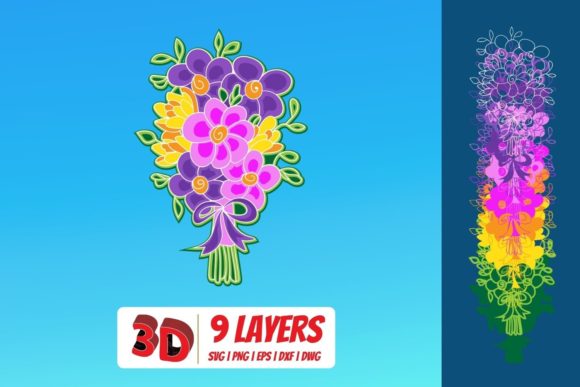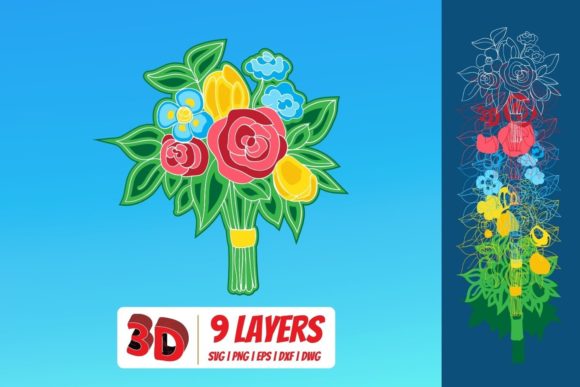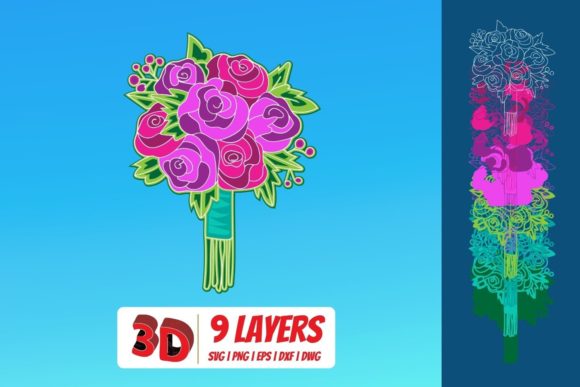
3D Bouquet 4 SVG
Crafting intricate paper flowers has long been a staple in the world of DIY decor, wedding planning, and scrapbooking. However, achieving that perfect three-dimensional depth without spending hours on tedious assembly can be a challenge for many creators. This is where digital design files come into play, offering precision and ease. Specifically, the 3D Bouquet 4 SVG has emerged as a popular resource for both hobbyists and professional designers who want to create stunning floral arrangements with minimal effort. By leveraging vector-based technology, this file allows users to cut complex layers that stack together to form realistic, voluminous blooms.
Understanding the Format and File Contents
When you purchase or download a digital craft file, it is crucial to understand what formats are included and how they function. The 3D Bouquet 4 SVG Download typically comes in a zipped folder containing multiple file types: SVG, DXF, PNG, and EPS. Each format serves a specific purpose and software ecosystem, ensuring compatibility across various cutting machines and design programs.
- SVG (Scalable Vector Graphics): This is the primary format for most modern electronic cutting machines. It is an XML-based vector image format for two-dimensional graphics with support for interactivity and animation. For the 3D Bouquet 4 SVG, this file contains the precise paths needed for your machine to cut the individual petals and leaves. It is compatible with Cricut Design Space, Silhouette Designer Edition, Make the Cut (MTC), Sure Cuts A Lot (SCAL), and Brother ScanNCut’s Canvas software.
- DXF (Drawing Exchange Format): A versatile vector data format developed by Autodesk. While often used alongside SVG, DXF is particularly important for users of older or more basic software versions. The 3D Bouquet 4 SVG includes a DXF file specifically for use with Silhouette Basic Edition, which may not fully support all SVG features.
- EPS (Encapsulated PostScript): Primarily used in professional graphic design workflows. If you plan to edit the design extensively before cutting, or if you are using desktop publishing tools, the EPS file is essential. It works seamlessly with CorelDraw, Inkscape, and Adobe Illustrator, allowing for high-level customization of colors, sizes, and elements.
- PNG (Portable Network Graphics): This is a raster image file with a transparent background, rendered at 300 DPI. While you cannot cut directly from a PNG, it serves as a valuable reference image. It helps you visualize the final look of the 3D Bouquet 4 SVG, check color combinations, or use it as a guide when assembling the physical layers.
Why Choose a 3D Digital Flower Design?
The appeal of the 3D Bouquet 4 SVG lies in its ability to transform flat sheets of material—whether cardstock, vellum, felt, or fabric—into objects with tangible depth. Unlike traditional 2D flower designs that lay flat against a surface, 3D designs utilize layered cutting. By cutting multiple identical shapes in varying sizes and stacking them, the resulting flower gains volume and realism.
This technique is particularly effective for creating centerpieces, wall art, hair accessories, and gift embellishments. The 3D Bouquet 4 SVG provides pre-calculated layer offsets, meaning you do not have to manually calculate the scaling percentages for each subsequent layer. This saves significant time and reduces the risk of misalignment during assembly. For business owners selling handmade goods, this efficiency translates directly into higher production capacity and consistent product quality.
Software Compatibility and Workflow
One of the strongest advantages of the 3D Bouquet 4 SVG is its broad software compatibility. Whether you are a casual crafter with a Cricut Maker or a professional designer working in Adobe Illustrator, there is a pathway to use this file effectively.
For Cutting Machine Users
If you are using Cricut Design Space, you can upload the SVG file directly. The software will recognize the different layers as separate elements, allowing you to assign different materials or colors to each layer easily. Similarly, Silhouette Studio users (both Basic and Designer Editions) can import the DXF or SVG files. In Silhouette Basic Edition, the DXF file ensures that all cutting lines are preserved correctly, even if certain advanced SVG features are unsupported.
For Graphic Designers
Professionals using CorelDraw, Inkscape, or Adobe Illustrator can open the EPS file. This opens up possibilities for modification. You might want to adjust the petal shape slightly to match a specific brand aesthetic, combine the bouquet with other elements like text or borders, or resize the entire composition without losing quality. Because these are vector files, you can scale the 3D Bouquet 4 SVG up or down infinitely without pixelation, ensuring crisp cuts regardless of the final size.
Practical Applications and Real-World Scenarios
The versatility of the 3D Bouquet 4 SVG makes it suitable for a wide range of projects. Here are a few common scenarios where this file shines:
- Wedding Decor: Create custom table runners, escort card holders, or backdrop decorations. Paper flowers made from the 3D Bouquet 4 SVG offer a sustainable alternative to fresh flowers, lasting indefinitely without wilting.
- Home Accents: Frame large-scale prints or mounted paper flowers for a unique piece of wall art. The layered effect adds texture and shadow, making the artwork pop off the canvas.
- Event Planning: For birthdays, baby showers, or corporate events, these bouquets can be used as favors or part of larger thematic displays. Their uniformity ensures a polished look across dozens of items.
- Fashion Accessories: Use smaller cuts from the file to create headbands, brooches, or bag charms. Vellum or metallic cardstock can give these accessories a delicate, elegant finish.
Evaluating Suitability and Considerations
While the 3D Bouquet 4 SVG offers numerous benefits, it is important to have realistic expectations regarding the crafting process. Creating a true 3D effect requires patience and attention to detail. Simply cutting the layers is only the first step; assembly involves scoring, folding, and gluing each layer to build height.
Material Choice: The type of paper or material you choose significantly impacts the final result. Thicker cardstocks hold their shape better but can be harder to fold intricately. Thinner materials like tissue paper or vellum require more delicate handling but yield a softer, more ethereal look. Experimenting with different textures can help you find the right balance for your project.
Tool Requirements: Beyond the cutting machine, you will need a weeding tool, tweezers for precise placement, and a strong adhesive such as tacky glue or double-sided tape dots. A bone folder or scoring tool can also help create sharp creases that enhance the 3D structure.
Conclusion
The 3D Bouquet 4 SVG represents a blend of convenience and creativity. By providing a comprehensive package of SVG, DXF, EPS, and PNG files, it ensures that users with varying levels of technical expertise and software preferences can access the design. Whether you are looking to streamline your production workflow as a business owner or simply enjoy the meditative process of assembling paper flowers, this file offers a robust solution. Its compatibility with major cutting platforms and design software makes it a flexible tool in any creator’s arsenal, proving that digital resources can significantly enhance the beauty and complexity of handmade crafts.