3D Tiger New Year Svg: Integrating High-Quality Vector Assets into Your Creative Workflow
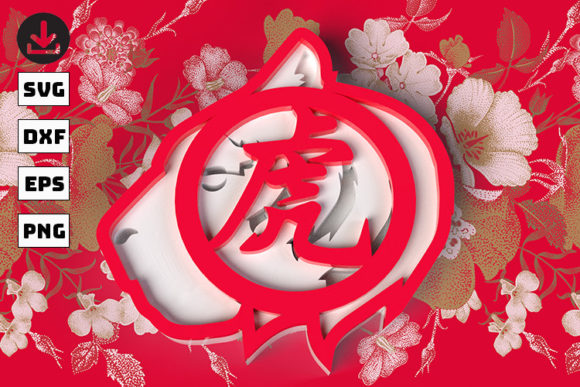
In the realm of digital crafting and small-scale manufacturing, the transition from concept to physical product relies heavily on the integrity of your source files. For creators working with cutting machines, laser engravers, or CNC routers, the file format is not merely a technical detail; it is the foundation of precision. The 3D Tiger New Year Svg represents a specific intersection of seasonal design and technical utility, offering a robust vector asset designed for high-fidelity reproduction across multiple materials.
This article explores how this specific digital asset fits into broader production workflows, addressing compatibility, preparation, and execution strategies for professionals and hobbyists alike. By understanding the nuances of SVG (Scalable Vector Graphics) and its companion formats like EPS and DXF, users can ensure that their final output—whether carved into wood, etched into metal, or cut from cardstock—matches the intended design without unnecessary rework.
Understanding the Digital Asset and File Integrity
The core value of the 3D Tiger New Year Svg lies in its vector nature. Unlike raster images (such as JPEGs or PNGs), which are composed of pixels and lose quality when scaled, vector graphics use mathematical equations to define lines and shapes. This allows the design to be resized infinitely without jagged edges or pixelation, a critical requirement for both large signage and intricate miniatures.
However, "vector" does not automatically mean "ready to cut." A well-constructed SVG file, such as the one provided in this digital package, contains clean node paths, closed shapes, and optimized layers. The product description emphasizes that this item is made with Adobe Illustrator and tested for quality. This implies a rigorous pre-production check where overlapping paths are resolved, and stray points are removed. For the user, this means less time spent troubleshooting software errors and more time focusing on material selection and machine calibration.
The package includes multiple formats to accommodate different software ecosystems:
- SVG: The standard for modern cutting machines like Cricut and Silhouette.
- EPS & DXF: Essential for CAD software, CorelDRAW, and older versions of Illustrator or AutoCAD.
- PNG (Transparent): Useful for visual previews or projects requiring bitmap data.
- PDF: Ideal for archival or printing purposes where vector editing is not required.
Distributing these variations ensures that whether you are using a cloud-based design tool or a local desktop application, the asset remains compatible. This flexibility reduces friction in the workflow, allowing teams or individuals to switch tools without losing design fidelity.
Pre-Production: Preparation and Compatibility Checks
Before initiating any cut or engrave job, proper preparation is the single most effective way to prevent material waste. The first step in integrating the 3D Tiger New Year Svg is verifying hardware compatibility. While the file is versatile, the physical limitations of your machine dictate the outcome.
If you are using a laser cutter, consider the thickness and type of material. The product details note that the design is created on a 30cm x 30cm page. This dimension is crucial for setting up your workspace in slicing software. If your bed size is smaller, you will need to scale the design down proportionally. However, scaling down too much may cause fine details in the tiger’s features to disappear or become difficult to cut accurately.
For those using blade-based cutters like the Cricut, the process involves additional considerations. Thick materials, such as chipboard or balsa wood, require significant force. The recommendation to double the layers of heavy chipboard or use 2mm balsa suggests that the design has structural elements that benefit from added rigidity. When preparing these materials, ensure that your blade depth is calibrated correctly. A blade that is too deep will cut through the backing paper; one that is too shallow will result in incomplete cuts, especially in dense materials.
Another critical pre-production step is checking the "weld" function. In many cutting software platforms, complex designs consist of multiple separate shapes. If these shapes share boundaries, they must be welded together before sending the job to the machine. Failure to weld can result in the machine attempting to cut the same line twice, leading to burned edges or misaligned cuts. Always preview the design in your software to identify potential overlaps or internal shapes that need grouping or welding.
Execution Strategies Across Different Materials
The versatility of the 3D Tiger New Year Svg allows it to interact with a wide range of substrates. Each material presents unique challenges and opportunities for execution.
Wood and Plywood
Natural wood offers warmth and texture, making it ideal for holiday decorations. When cutting wood, the grain direction affects the ease of cutting and the finish quality. Aligning the longest sides of your design with the wood grain can reduce tearing. For laser engraving, hardwoods like maple or birch provide a crisp contrast, while softer woods may char more easily. Adjusting the laser’s speed and power settings based on the material thickness is essential to achieve clean edges without excessive smoke residue.
Metal
Cutting or engraving metal requires specialized equipment, typically fiber lasers or high-power CO2 lasers with assist gases. The vector paths in the SVG must be precise, as metal does not forgive minor deviations. For engraving, the resolution of the vector nodes becomes paramount. Ensure that the file is imported at the correct DPI (dots per inch) equivalent for vector data, which is inherently infinite but rendered by the machine’s stepper motors. Using the DXF format may offer better compatibility with certain industrial control software.
Paper and Cardboard
For papercraft enthusiasts, the transparent PNG included in the package can serve as a guide for hand-cutting or scanning into vector software if needed. However, the SVG is superior for automated cutting. Cardboard, particularly corrugated board, adds a 3D element to the design. The "3D" aspect of the tiger likely refers to visual depth created through layering or shading techniques within the vector art. By cutting multiple layers of different colored cardstocks and assembling them, you can create a relief effect that mimics three-dimensionality without actual extrusion.
Post-Processing and Quality Control
Once the cutting or engraving process is complete, post-processing ensures the final product meets professional standards. For laser-cut items, removing char marks with a soft brush or sanding rough edges with fine-grit sandpaper enhances the aesthetic appeal. In the case of vinyl or adhesive-backed materials, weeding (removing excess material) requires patience and sharp tools to preserve delicate details, such as the tiger’s facial features.
Quality control should also involve a review of the assembly. If the design consists of interlocking parts, dry-fit the pieces before applying glue or permanent fasteners. This step allows you to catch any dimensional inaccuracies caused by material expansion or machine tolerance issues. Consistency in testing is key; once you find the optimal settings for a specific material batch, document them for future reference. This creates a knowledge base that improves efficiency over time.
Integration into Broader Business and Creative Workflows
For entrepreneurs and small business owners, the 3D Tiger New Year Svg is not just a standalone file but an asset in a larger inventory system. Organizing digital assets by category (e.g., Seasonal, Animals, Holidays) and format facilitates quick retrieval during peak demand periods like the Lunar New Year. Having a reliable, tested file reduces the risk of customer complaints due to poor print quality or cut failures.
Furthermore, this asset supports scalability. Whether you are producing a single custom gift or a batch of fifty wholesale items, the vector nature of the SVG ensures uniformity. This consistency is vital for brand reputation. It also allows for easy customization; designers can modify colors, add text, or adjust proportions within Illustrator or other compatible software to tailor the product to specific market segments without starting from scratch.
In educational settings, this file serves as an excellent teaching tool for demonstrating the principles of vector graphics, machine operation, and material science. Students can experiment with different settings and observe the direct impact on the physical outcome, bridging the gap between digital theory and practical application.
Conclusion
The successful use of the 3D Tiger New Year Svg depends on a systematic approach to planning, execution, and quality assurance. By leveraging the provided multi-format package, respecting material limitations, and employing careful pre-flight checks, creators can produce high-quality results efficiently. This digital item is more than a decorative graphic; it is a functional component of a streamlined production workflow, enabling precision and creativity across diverse mediums. As you integrate this asset into your projects, remember that the quality of the output is directly proportional to the care taken in the preparation phase.