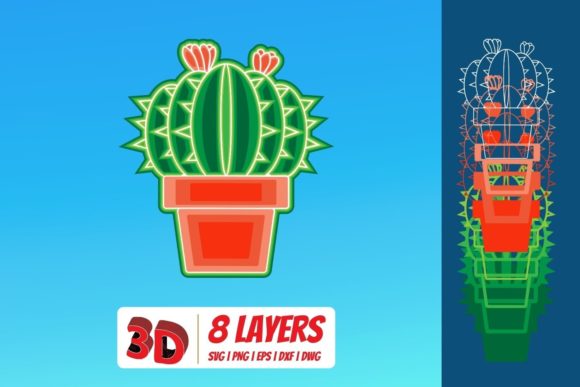
3D Cactus SVG
The intersection of digital design and physical fabrication has fundamentally changed how creators approach crafting, branding, and interior decoration. At the center of this shift is the vector file—a versatile digital asset that serves as the blueprint for everything from vinyl decals to laser-cut wood panels. Among the trending assets in this space, the 3D Cactus SVG stands out not just for its aesthetic appeal but for its technical versatility. This specific design format allows users to translate a flat digital image into a layered, dimensional object, adding depth and texture to projects that would otherwise look two-dimensional.
For professionals and hobbyists alike, understanding the nuances of these files is crucial for efficient workflow management. The 3D Cactus SVG Download includes svg, dxf, png and eps formats in a zipped folder, providing a comprehensive toolkit for various software environments. This multi-format approach ensures that whether you are using high-end professional suites or entry-level cutting machine software, you have the appropriate file type to execute your vision without unnecessary conversion errors or quality loss.
Understanding the File Ecosystem
Before diving into implementation, it is essential to understand what each component of the download brings to the table. A single design file often needs to interact with different stages of production. The inclusion of multiple formats within the zipped folder addresses the fragmentation of the creative software market, allowing for seamless integration regardless of your preferred toolchain.
SVG: The Standard for Cutting Machines
The Scalable Vector Graphics (SVG) format is the industry standard for computer-controlled cutting machines. It uses mathematical equations to define shapes, ensuring that lines remain crisp at any size. For the 3D Cactus SVG, the SVG file is likely structured with separate layers or paths that represent the different depths of the cactus. This layering is critical for creating the "3D" effect, where one part of the cactus sits slightly behind or above another.
This format is compatible with a wide array of popular software platforms:
- Cricut Design Space: Ideal for hobbyists and small-batch producers using Cricut Maker or Explore machines.
- Silhouette Designer Edition: Offers robust editing capabilities for Silhouette Cameo users who need more control than the basic version provides.
- Make The Cut (MTC): A powerful standalone software known for its precise nesting and alignment tools.
- Sure Cuts A Lot (SCAL): A cost-effective alternative that supports complex cut files and offers extensive customization options.
- Brother ScanNCut “Canvas” software: Essential for Brother machine owners to prepare designs for their proprietary cutting systems.
When working with SVGs, the primary advantage is precision. You can resize the cactus design from a small sticker to a large wall decal without pixelation. However, because it is a vector format, it does not contain color information by default; colors are assigned during the cutting process based on the material loaded into the machine.
DXF: Bridging the Gap for Basic Software
Not all users operate within the premium software ecosystems. Many crafters utilize Silhouette Basic Edition, which has limited compatibility with modern SVG features like groups and nested layers. The DXF (Drawing Exchange Format) included in the download serves as a universal translator. While older than SVG, DXF is widely supported across CAD programs and basic cutting software.
Using the DXF file ensures that even if your software struggles with the complexity of the 3D layering in the SVG, you still have access to the core geometry of the cactus design. It is particularly useful for laser cutters that rely on simple path data rather than complex layer structures. By having both SVG and DXF, the download caters to both modern digital cutters and traditional laser engraving workflows.
EPS: Professional Vector Editing
For graphic designers and print professionals, the Encapsulated PostScript (EPS) format is indispensable. Unlike SVG, which is optimized for cutting paths, EPS is designed for high-fidelity vector illustration and printing. This file type is fully editable in CorelDraw, Inkscape, and Adobe Illustrator.
If your workflow involves integrating the 3D Cactus into a larger brand identity, marketing collateral, or packaging design, the EPS file allows you to manipulate curves, adjust stroke weights, and combine the cactus with other vector elements seamlessly. It preserves the integrity of the design while offering the flexibility required for professional layout work. This is especially relevant for entrepreneurs and marketers who need consistent visual assets across digital and print media.
PNG: Visual Reference and Quick Prototyping
The Portable Network Graphics (PNG) file included in the zip serves a different purpose. With a transparent background and a resolution of 300 DPI, this is a raster image. It cannot be used directly for cutting because it lacks the vector paths necessary for precision slicing. Instead, the PNG acts as a visual reference or a mockup.
In a practical workflow, you might use the PNG to visualize how the final colored product will look before committing to expensive materials. It is also useful for social media previews, email newsletters, or quick client presentations where a full vector edit is unnecessary. The 300 DPI resolution ensures that the preview looks sharp on high-resolution screens, helping stakeholders approve the design direction early in the process.
Integrating 3D Cactus SVG into Your Workflow
Having the right file is only half the battle; the true value lies in how you integrate it into your production pipeline. The "3D" aspect of the cactus implies a multi-layered construction. This requires careful planning to ensure that the final physical product matches the digital intent.
Preparation and Layer Management
Upon unzipping the folder, the first step is to inspect the file structure. Open the SVG in your chosen software (e.g., Cricut Design Space or Silhouette Studio). You should see distinct layers corresponding to the back, middle, and front sections of the cactus. If the layers are grouped, ungroup them to access individual components. Proper organization here is vital for efficiency. Labeling layers clearly—such as "Back Leaf," "Middle Stem," and "Front Flower"—prevents confusion during the cutting phase.
For those using CorelDraw or Illustrator via the EPS file, check the layer panel to ensure that no elements are hidden or locked. Sometimes, vector files imported from external sources may have stray points or overlapping paths that can cause cutting errors. Cleaning up these artifacts before export saves time and reduces material waste.
Material Selection and Compatibility
The choice of material significantly impacts the outcome of a 3D project. Vinyl is a common choice for wall decals, offering durability and ease of application. However, for a true 3D effect, thicker materials like chipboard, foam board, or thin plywood (for laser cutting) are often preferred. These materials hold their shape better and provide the structural integrity needed for stacking layers.
Ensure your cutting machine or laser cutter is calibrated for the thickness of your chosen material. When using the 3D Cactus SVG, pay attention to the cut settings recommended by your machine’s manufacturer. Incorrect pressure or speed can result in incomplete cuts, leaving pieces attached to the backing sheet and ruining the assembly process.
Assembly and Quality Control
The final stage involves assembling the cut pieces. Since the design relies on depth, alignment is critical. Use double-sided tape, glue dots, or adhesive spray to secure the layers. Start with the largest or backmost piece and work your way forward. This method minimizes the risk of misalignment as you add subsequent layers.
Quality control should happen at every step. After cutting, inspect each piece for clean edges and complete separation. During assembly, check that the cactus stands upright or adheres flatly, depending on the intended display method. If using the design for a commercial product, consistency is key. Establish a standard operating procedure (SOP) for assembly to ensure that every unit meets your quality standards.
Strategic Applications Across Industries
The versatility of the 3D Cactus SVG extends beyond simple crafts. Its adoption can drive value in various professional contexts.
Small Business Owners and Entrepreneurs: Incorporate the design into home decor lines, nursery decorations, or southwestern-themed merchandise. The 3D element adds perceived value, allowing for higher price points compared to flat stickers. The availability of EPS files means you can easily adapt the logo for business cards or packaging inserts.
Educators and Bloggers: Use the design for classroom decorations, STEM lessons on geometry (discussing angles and symmetry), or DIY workshop tutorials. Creating content around the setup process of the SVG files can attract traffic to blogs or YouTube channels, leveraging SEO benefits through practical, how-to guides.
Marketers and Freelancers: For seasonal campaigns, such as Earth Day or summer promotions, a 3D cactus prop can serve as an eye-catching photo booth backdrop or event signage. The ability to scale the SVG ensures it works for both digital ads (using the PNG mockup) and physical installations.
Long-Term Utility and Organization
To maximize the return on investment for this digital asset, organize your library effectively. Store the zipped folder in a dedicated directory labeled by theme (e.g., "Desert Plants") or project type. Maintain backups of the original downloaded files. As you experiment with different materials and software versions, keep notes on successful cut settings and assembly techniques.
By treating the 3D Cactus SVG not just as a single image but as a modular component of a broader creative workflow, you unlock its full potential. Whether you are producing a single gift for a friend or scaling up a line of boutique home goods, the combination of SVG, DXF, EPS, and PNG formats provides the flexibility and reliability needed for successful execution. Embracing this structured approach to digital crafting ensures that your projects are not only visually appealing but also professionally executed and efficiently managed.