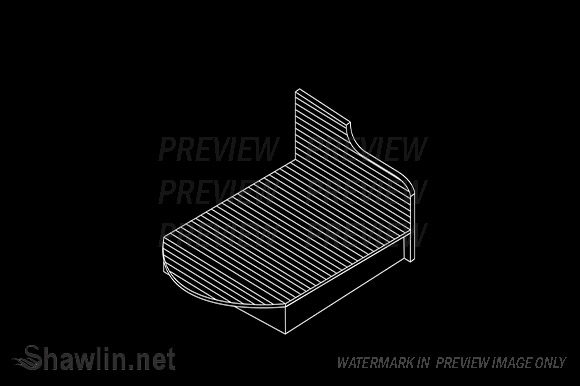
Exploring the Aesthetic and Technical Nuances of 3D View of a Wooden Bed Furniture
In the realm of interior design, architecture, and digital visualization, the ability to represent furniture with precision is paramount. Among the most significant pieces of furniture in any residential or hospitality space, the bed serves as both a functional necessity and a central aesthetic anchor. When designers, manufacturers, and educators seek to showcase these pieces, they often turn to advanced rendering techniques. Specifically, a 3d View of a Wooden Bed Furniture offers a level of depth, realism, and detail that static two-dimensional images simply cannot match. This article delves into the technical specifications, artistic value, and practical applications of utilizing high-quality 3D vector and raster illustrations of wooden beds.
The Intersection of Traditional Craftsmanship and Digital Innovation
Wooden furniture has long been associated with warmth, durability, and timeless elegance. However, translating the grain of oak, the smooth finish of mahogany, or the intricate carving of walnut into a digital format requires a sophisticated approach. The modern workflow for creating a 3d view of a wooden bed furniture drawing involves a dual-format strategy that caters to both legacy software compatibility and high-resolution display needs. By providing assets in both Vector EPS (Encapsulated PostScript) formats and high-resolution JPEGs, creators ensure that their work is accessible to a broad spectrum of users, from hobbyists using older design suites to professionals working on cutting-edge projects.
The decision to offer a square, centered design in these illustrations is not merely an aesthetic choice but a functional one. A centered composition allows for balanced cropping and easy integration into various layout designs, whether they are web banners, print catalogs, or presentation slides. This symmetry ensures that the focal point—the bed itself—remains the undisputed star of the visual narrative, allowing viewers to appreciate the structural integrity and design lines without distraction.
Understanding the Technical Specifications: EPS and JPEG Formats
To fully appreciate the utility of these digital assets, it is essential to understand the distinct advantages of each file format included in such packages. The inclusion of a Vector EPS file, particularly in an older version compatible with legacy software, represents a thoughtful consideration for users who may not have access to the latest updates of design applications like Adobe Illustrator or CorelDRAW.
- Vector EPS Files: These files are composed of mathematical paths rather than pixels. This means that a 3d View of a Wooden Bed Furniture saved in EPS format can be scaled to any size—from a business card to a billboard—without losing quality. For architects and engineers who need to integrate furniture plans into larger blueprints, this scalability is invaluable. The "older version" specification ensures that users running older operating systems or software versions can still open and edit the file, removing barriers to entry for educational institutions or smaller businesses with constrained IT budgets.
- High-Resolution JPEGs: While vectors are excellent for line work and scalable graphics, raster images like JPEGs are superior for displaying complex textures and lighting effects. A high-resolution JPG captures the subtle nuances of wood grain, shadows, and highlights, providing a photorealistic representation. This format is ideal for web use, social media marketing, and quick previews where file size matters but visual impact remains high.
The Importance of Watermarking and Asset Protection
In the digital marketplace, protecting intellectual property is crucial. The practice of applying watermarks only to preview images while delivering clean, unwatermarked files upon purchase strikes a delicate balance between marketing and security. For a product like a 3d view of a wooden bed furniture drawing, this approach allows potential buyers to assess the quality, resolution, and style of the illustration before committing to a purchase. It demonstrates confidence in the creator’s work while safeguarding against unauthorized distribution.
This policy also enhances trust. Buyers know exactly what they are getting—a pristine, professional-grade asset free of distracting overlays that could ruin the integrity of their final designs. The absence of watermarks in the delivered files ensures that the end product, whether it be a website for a luxury hotel chain or a catalog for a custom furniture maker, maintains a polished and professional appearance.
Practical Applications Across Industries
The versatility of 3D wooden bed illustrations extends far beyond simple decoration. Various sectors leverage these assets for specific, high-stakes purposes.
Interior Design and Architecture
For interior designers, visualizing a space before construction or renovation begins is critical. A 3d View of a Wooden Bed Furniture allows designers to place a realistic centerpiece within a virtual room model. Clients can see how the warm tones of the wood complement the wall colors, flooring, and lighting fixtures. This capability reduces miscommunication and helps clients make informed decisions about their living spaces. The ability to customize requests further empowers designers to tailor the bed’s dimensions, materials, or surrounding elements to fit unique client requirements.
E-Commerce and Retail
In the competitive world of online retail, product photography is king. However, shooting physical products is expensive and logistically challenging. High-quality 3D renders offer a cost-effective alternative. E-commerce platforms can utilize these images to create immersive shopping experiences. Customers can zoom in to inspect the joinery, view the texture of the wood, and imagine the bed in their own homes. The square, centered format of these illustrations is particularly well-suited for e-commerce grids, ensuring consistent visual alignment across product listings.
Education and Training
Educators in fields such as woodworking, industrial design, and graphic arts benefit significantly from having access to high-quality reference materials. A detailed 3d view of a wooden bed furniture drawing serves as an excellent teaching tool. Students can analyze the construction techniques, study the proportions, and learn how light interacts with different wood finishes. The availability of vector files allows students to deconstruct the image, studying the underlying geometry and layer structure, which fosters a deeper understanding of digital modeling principles.
Customization and the Role of Direct Communication
One of the most valuable aspects of acquiring specialized digital assets is the opportunity for customization. The note encouraging users to contact the creator via a website form highlights the collaborative nature of professional design services. Standard templates, while useful, may not always meet the specific needs of a project. Perhaps a designer needs the bed rendered in a different wood species, or with modified headboard details. Or perhaps a researcher needs the illustration cropped to focus solely on the mattress support system.
By fostering direct communication, creators can provide tailored solutions that generic stock libraries cannot offer. This personalized approach ensures that the final asset aligns perfectly with the user’s vision. Whether it involves adjusting the aspect ratio, changing the background, or altering the lighting conditions, the willingness to accommodate custom requests adds significant value to the initial purchase.
Considerations for Selecting the Right Visual Assets
When integrating a 3d View of a Wooden Bed Furniture into a project, several factors should be considered to ensure optimal results. First, consider the intended output medium. If the image will be printed at a large scale, the vector EPS file is the superior choice due to its infinite scalability. If the image is primarily for web use, the high-resolution JPEG provides a good balance of quality and load speed.
Secondly, think about the color palette and style consistency. Wooden furniture comes in a wide variety of shades, from pale birch to deep espresso. Ensure that the chosen illustration matches the overall aesthetic of your project. The centered, square composition mentioned earlier aids in this regard, as it provides a neutral canvas that can be easily integrated into various design schemes without clashing with other elements.
Finally, verify the software compatibility. While the provision of older version EPS files mitigates many risks, it is always prudent to check the specific requirements of your design environment. Understanding the limitations and capabilities of your software stack will help you maximize the utility of the purchased assets.
Conclusion
The creation and utilization of high-quality 3D illustrations of wooden furniture represent a convergence of art, technology, and commerce. By offering assets in multiple formats, including versatile vector and raster options, creators empower a diverse audience to bring their visions to life. The emphasis on clean, watermark-free deliverables and the openness to customization further enhance the appeal of these resources. Whether you are an architect designing a boutique hotel, a retailer launching a new furniture line, or an educator teaching the next generation of designers, a well-crafted 3d view of a wooden bed furniture drawing is an indispensable tool in your digital arsenal. It bridges the gap between imagination and reality, allowing for precise, compelling, and professional visual communication.