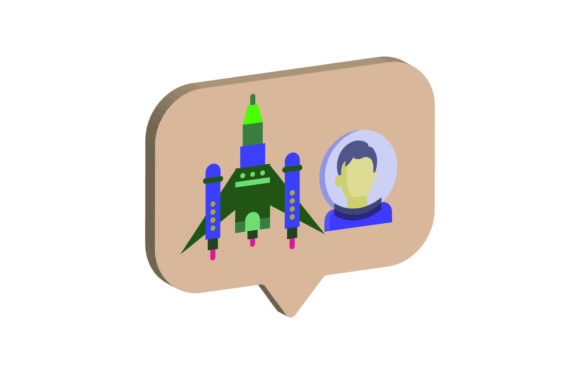
Mastering the 3D Icon Space Astronaut: A Complete Guide to Digital Assets for Modern Creators
In an era where digital content is king, the ability to produce high-quality, visually striking graphics is more important than ever. Whether you are a graphic designer crafting a brand identity, a small business owner creating marketing materials, or a hobbyist looking to personalize merchandise, having access to versatile and professional-grade assets can make all the difference. One such asset that has gained significant traction in the creative community is the 3D Icon Space Astronaut. This guide will explore what this specific design entails, why it is valuable, and exactly what you receive when you acquire this comprehensive digital package.
The Rise of 3D Icons in Digital Design
Before diving into the specifics of the astronaut icon, it is essential to understand the broader trend of 3D icons in modern design. For years, flat design dominated the digital landscape, prized for its cleanliness and simplicity. However, as technology advanced and user interfaces became more immersive, there was a shift toward depth, texture, and realism. 3D icons offer a tactile quality that flat designs often lack, providing a sense of dimensionality that captures attention and enhances user engagement.
Astronauts, in particular, have become a staple motif in this genre. They symbolize exploration, innovation, future-tech, and the limitless possibilities of space. When rendered in a 3D style, these figures convey a playful yet sophisticated aesthetic that appeals to a wide audience. From tech startups to educational platforms, the "Space" theme resonates with concepts of discovery and forward-thinking. By utilizing a pre-made 3D Icon Space Astronaut, creators can instantly inject this powerful symbolism into their projects without needing advanced modeling skills.
What Exactly Is Included in This Digital Package?
When you purchase or download a digital design file, understanding the deliverables is crucial. Many beginners assume they are receiving just one image, but professional asset packages are designed to maximize utility across different platforms and software. The package described here provides a robust toolkit containing 6 digital files in total, ensuring compatibility with virtually any design workflow. Let’s break down each component and explain its specific purpose.
1. The AI File (Adobe Illustrator)
The .AI file is the native format for Adobe Illustrator, the industry-standard vector graphics editor. This file contains the editable vector paths of the 3D astronaut icon. Vectors are mathematical representations of shapes, meaning they can be scaled to any size—from a tiny favicon to a massive billboard—without losing quality or becoming pixelated. This file is ideal for designers who need to tweak colors, adjust proportions, or integrate the astronaut into larger composite illustrations.
2. The EPS File (Encapsulated PostScript)
Similar to the AI file, the .EPS file is a vector format but is universally compatible with a wider range of graphic software, including CorelDRAW, Inkscape, and older versions of Adobe products. If you do not use Adobe Illustrator specifically, the EPS file ensures you can still open and edit the artwork. It is also frequently used for sending print-ready files to commercial printers who require vector data for high-resolution output.
3. The SVG File (Scalable Vector Graphics)
The .SVG file is the gold standard for web design. Because it is XML-based, SVG files are lightweight, load quickly, and remain crisp on all screen resolutions, including Retina displays and mobile devices. If you are building a website, app interface, or digital presentation, the SVG version of your 3D Space Astronaut will ensure that your visuals look sharp and professional on every device your users might employ.
4. The DXF File (Drawing Exchange Format)
You might wonder why a digital graphic needs a .DXF file. This format is primarily used in Computer-Aided Design (CAD) and by laser cutters or vinyl plotters. If you plan to take your design offline—for example, cutting a physical sign out of acrylic, engraving wood, or printing a decal for a car window—the DXF file provides the precise path data needed by these machines. It bridges the gap between digital art and physical production.
5. The JPG File (Joint Photographic Experts Group)
The .JPG file is a raster image format known for its broad compatibility. While it does not support transparency (the background will likely be white or black), it is perfect for quick previews, social media posts, or inserting images into word processing documents like Microsoft Word or PowerPoint. It is the most universally recognized file type, making it easy to share with clients or team members who may not have design software installed.
6. The PNG File (Portable Network Graphics)
Frequently paired with JPGs, the .PNG file supports transparency. This is a critical feature for overlaying the 3D astronaut onto other designs, websites, or backgrounds without a distracting square box around it. If you want the astronaut to appear as if it is floating in your layout, the PNG version is your go-to choice. It preserves the detailed shading and lighting effects of the 3D render while allowing for seamless integration.
Canvas Size and Resolution Standards
A common question among new designers is about resolution and canvas size. This package specifies a canvas size of 1920px x 1280px. To put this in perspective, this is a standard 3:2 aspect ratio, commonly found in photography and desktop wallpapers. At 1920 pixels wide, the images are high-definition enough for most web uses and even some medium-format prints.
However, because the core assets (AI, EPS, SVG, DXF) are vectors, the actual resolution is infinite. You can export these vector files at any resolution you desire. The provided JPG and PNG files serve as convenient, ready-to-use high-res snapshots, but the true power lies in the vector formats, which allow you to scale the astronaut up to hundreds of feet tall if needed, without any loss of clarity.
Why Editability Matters in Professional Workflows
The prompt emphasizes that these files are "easy to edit and use in your designs." This is a vital selling point. Buying a static image limits your creativity; buying an editable file empowers you. With the AI, EPS, and SVG files, you can:
- Change Colors: Match the astronaut’s suit to your brand’s primary color palette.
- Modify Textures: Adjust the glossiness or matte finish of the helmet visor.
- Isolate Elements: Separate the astronaut from the background or detach specific tools or props.
- <Combine Designs: Use the astronaut as a mascot alongside other 3D elements to create a cohesive scene.
This flexibility saves hours of work. Instead of trying to recreate a complex 3D character from scratch using expensive software like Blender or Cinema 4D, you start with a polished foundation and customize it to fit your unique vision.
Practical Applications for Your Business or Projects
So, how can you actually use this 3D Icon Space Astronaut? The applications are nearly limitless. Here are a few practical examples:
- Educational Materials: Create engaging worksheets or slide decks for science classes. The astronaut makes learning about astronomy feel exciting and relevant.
- Tech Branding: Use the icon for a startup logo or app icon. It communicates innovation and cutting-edge technology.
- Merchandise: Print the design on t-shirts, mugs, or stickers for a space-themed event or store.
- Social Media Campaigns: Use the PNG version as a featured graphic for posts about future trends, travel, or STEM education.
- Web Development: Implement the SVG file as an interactive element on a landing page, perhaps animating it slightly to draw visitor attention.
Common Misunderstandings About Digital Files
It is helpful to clarify a few misconceptions. First, owning a digital file does not automatically grant you copyright ownership of the original artwork unless specified otherwise. Usually, you are granted a license to use the asset for personal or commercial projects, but you cannot resell the raw file itself as your own product. Always check the licensing terms.
Second, do not confuse "editable" with "simple." While the files are easy to use, working with vector software requires a basic learning curve. However, resources like YouTube tutorials and help centers make it accessible for beginners. You do not need to be an expert to change a color or resize an object; basic familiarity with your chosen software is sufficient.
Conclusion: Elevate Your Creativity Today
The 3D Icon Space Astronaut package is more than just a picture; it is a versatile toolkit designed to streamline your creative process. By providing six distinct file formats, it ensures that no matter your end goal—whether it’s a website, a printed poster, or a laser-cut sign—you have the right tool for the job. The combination of high-quality 3D aesthetics, scalable vector formats, and transparent raster options offers unparalleled flexibility.
For anyone looking to add a touch of cosmic wonder and professional polish to their designs, this asset is an invaluable addition to your digital library. Thank you for exploring the possibilities of 3D iconography, and we hope this guide helps you harness the full potential of your new creative resources.