The 3D Stop Icon: A Versatile Visual Tool for Modern Design
In the fast-paced world of digital communication, clarity is king. When seconds count, a well-designed visual cue can bridge the gap between confusion and immediate understanding. Enter the 3D Stop Icon, a design element that has evolved far beyond its basic functional roots to become a staple in user interface (UI) design, safety signage, and creative branding. This isn't just a red octagon; it’s a sophisticated graphical asset that commands attention through depth, texture, and dimensionality.
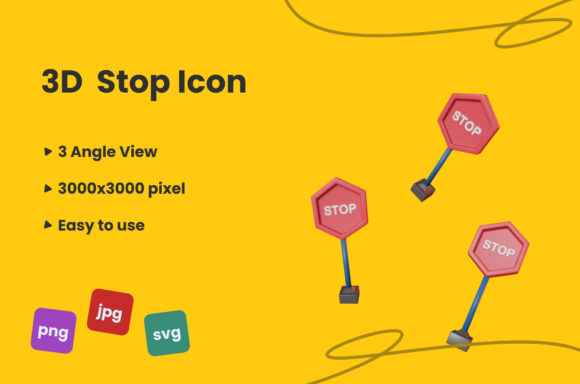
For designers, developers, and content creators aged 20 to 50 who are constantly looking for ways to elevate their projects, understanding the nuances of high-quality graphic assets is crucial. The specific iteration we are discussing here—a high-resolution, multi-format set including JPG, PNG, and SVG files at 3000×3000 pixels—offers a level of versatility that standard clipart simply cannot match. Whether you are building a mobile app, designing a website, or creating physical marketing materials, this icon serves as a powerful tool for signaling cessation, safety, or finality.
Why Dimension Matters in User Interface Design
Gone are the days when flat, two-dimensional icons were the only option available. While minimalism remains popular, there is a growing trend toward "neumorphism" and "glassmorphism," where subtle shadows, highlights, and 3D effects create a sense of tactility. A 3D Stop Icon fits perfectly into these modern aesthetic frameworks. It doesn’t just sit on the screen; it feels like it belongs there, inviting interaction.
Consider the psychology of depth. In real life, objects that cast shadows and have volume feel more tangible and important. When a user sees a 3D stop button on an application interface, their brain processes it as a physical object they can press. This subtle psychological nudge can increase engagement and reduce errors. For instance, in a video editing software, a 3D stop icon feels more authoritative than a flat one, reinforcing the idea that stopping the current action is a significant decision.
The availability of a 3000×3000 pixel resolution ensures that whether you are displaying this icon on a massive digital billboard or a tiny smartwatch screen, the edges remain crisp and the details remain intact. There is no pixelation, no blurring, and no loss of integrity. This is particularly important for brands that want to maintain a premium image across all touchpoints.
Real-World Applications Across Industries
The utility of a high-quality 3D stop icon extends far beyond simple web buttons. Let’s explore how different sectors leverage this visual language in practical scenarios.
Digital Media and Content Creation
For podcasters, YouTubers, and streamers, the stop button is a universal symbol. However, in a crowded digital landscape, standing out requires more than just functionality. A custom 3D stop icon can be used as a thumbnail element, a watermark, or even a transition effect in video intros. Imagine a gaming channel where every time the host hits pause, a stylized 3D stop icon slams onto the screen with dynamic lighting. It adds a layer of production value that keeps viewers engaged. The PNG format, with its transparency support, allows these icons to be overlaid seamlessly on any background without awkward white boxes.
Safety and Industrial Design
In industrial settings, safety is paramount. While traditional stop signs are flat, modern control panels and emergency interfaces are increasingly adopting 3D designs to enhance visibility and recognition. A 3D stop icon on a machine’s control panel not only looks professional but also stands out against complex backgrounds. The depth helps operators locate the emergency stop function quickly during high-stress situations. The high-resolution SVG file ensures that when these icons are scaled up for large machinery labels, they retain their legibility and impact.
Educational Platforms
Online learning platforms are competing for student attention. Interactive quizzes and assessment tools often use stop icons to indicate the end of a timed section or to halt an auto-playing lecture. A 3D version of this icon can make the interface feel more playful and less sterile. For younger audiences or even adult learners, the tactile appearance of a 3D icon can make the learning experience feel more immersive and less like a chore. It transforms a functional necessity into a friendly interface element.
Technical Advantages of Multi-Format Assets
One of the most compelling aspects of this design package from Silenic Co is its comprehensive format support. Each file type serves a distinct purpose in the design workflow, ensuring that professionals never have to compromise on quality or flexibility.
- JPG File: Ideal for web backgrounds and static images where file size optimization is key. The 3000×3000 resolution provides ample detail for print-ready materials or high-DPI screens. It’s perfect for embedding in presentations or social media graphics where transparency isn’t required.
- PNG File: The workhorse of web design. With support for alpha channels, the PNG version allows the 3D icon to float over any background color or image. This is essential for UI overlays, app development, and composite images where the icon needs to blend naturally into diverse environments.
- SVG File: Scalable Vector Graphics are the gold standard for responsive web design. Because SVGs are mathematically defined rather than pixel-based, they can be resized infinitely without losing quality. This means the same 3D stop icon can be used as a tiny favicon and a full-page hero image with equal effectiveness. It’s also lightweight, contributing to faster page load times.
This trio of formats covers almost every conceivable use case. Designers no longer need to hunt for separate resources or worry about compatibility issues. Having everything in one high-quality package streamlines the creative process, allowing for faster iteration and deployment.
Considerations for Implementation
While the benefits are clear, integrating a 3D stop icon effectively requires thoughtful consideration. First, context is everything. A heavy, glossy 3D icon might look fantastic on a tech blog but could appear out of place on a minimalist financial dashboard. Designers must balance the aesthetic appeal of the 3D effect with the overall brand voice. If your brand relies on strict flat design principles, a 3D icon might disrupt the visual harmony unless used sparingly as an accent.
Secondly, accessibility should never be an afterthought. While a 3D icon is visually striking, it must still convey its meaning clearly to users with visual impairments. Ensure that the icon is accompanied by appropriate alt text and that the color contrast meets WCAG guidelines. The red hue of a stop icon is universally recognized, but relying solely on color is risky. Combining the visual cue with clear typography or additional symbols reinforces the message.
Finally, consider the technical performance. While SVGs are efficient, complex 3D effects achieved through CSS or WebGL can sometimes slow down rendering on older devices. Test your implementation across various browsers and screen sizes to ensure smooth performance. The provided 3000×3000 pixel assets give you plenty of room to scale down, but always optimize for the target audience’s typical device.
Conclusion
The 3D Stop Icon is more than just a graphic; it’s a strategic design element that enhances usability, aesthetics, and brand identity. By offering high-resolution files in multiple formats, Silenic Co has provided a resource that caters to the diverse needs of modern creators. Whether you are stopping a video, halting a process, or emphasizing a safety warning, this icon delivers impact and professionalism. As digital interfaces continue to evolve, having access to versatile, high-quality assets like this will remain essential for anyone looking to create engaging, user-friendly experiences.