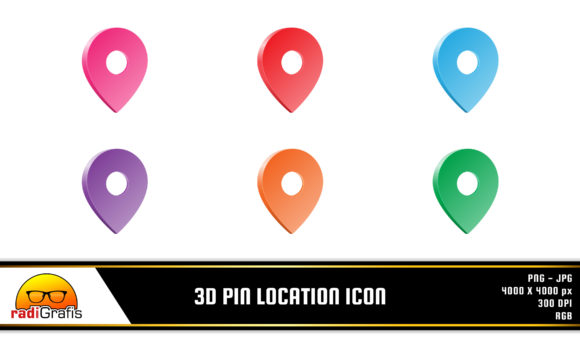
3D Pin Icon
In an era where digital interfaces dominate professional communication, the subtle distinction between flat design and dimensional graphics has become a critical factor in user engagement. The 3D Pin Icon represents more than just a visual embellishment; it is a strategic asset for entrepreneurs, marketers, and creators who seek to elevate their brand presence without overwhelming their audience. This collection offers a sophisticated solution for those looking to add depth, realism, and tactile appeal to their digital projects.
The primary value of incorporating a 3D Pin Icon into your workflow lies in its ability to convey importance, location, or achievement with immediate visual clarity. Unlike standard two-dimensional symbols, a three-dimensional pin suggests weight, permanence, and focus. For small business owners and freelancers, this can translate into higher click-through rates on maps, better visibility for featured products, or a more polished aesthetic for educational materials. By understanding the strategic application of these assets, you can move beyond simple decoration and toward intentional design that supports your broader business goals.
Strategic Value of Dimensional Graphics
When evaluating design resources, it is essential to consider how they align with your operational efficiency and brand positioning. The 3D Pin Icon serves as a versatile tool across multiple disciplines. For educators and bloggers, these icons can highlight key takeaways or important dates in course materials and articles, guiding the reader’s eye to what truly matters. In the realm of marketing, a well-executed 3D pin can draw attention to specific locations in promotional campaigns or serve as a badge of quality for premium services.
The decision to use 3D elements over flat ones should be driven by context. Three-dimensional graphics often imply modernity and high production value. When used correctly, they signal to your audience that you pay attention to detail—a trait that resonates deeply with decision-makers and customers alike. However, this power comes with responsibility. Overuse of complex 3D assets can clutter an interface, distracting from the core message. Therefore, the goal is not to decorate every element, but to use the 3D Pin Icon strategically to anchor key information points.
- Enhanced Visual Hierarchy: Use pins to mark priority items in dashboards, presentations, or web layouts.
- Brand Differentiation: A consistent style of 3D graphics can become part of your unique brand identity.
- User Guidance: Pins naturally draw the eye, making them ideal for call-to-action buttons or location markers.
Technical Specifications and Workflow Integration
For professionals who value precision and scalability, the technical specifications of a digital asset are just as important as its aesthetic appeal. This collection is designed to integrate seamlessly into high-end workflows, ensuring that your final output remains crisp and professional regardless of the platform. Understanding these specifications helps prevent common pitfalls such as pixelation or color mismatching during the printing or web deployment process.
The package includes both PNG and JPG formats, catering to different technical requirements. The inclusion of 6 PNG files is particularly valuable for designers working with layered compositions. PNGs support transparency, allowing the 3D Pin Icon to be placed over any background—be it a dark mode interface, a textured paper scan, or a vibrant gradient—without unwanted white boxes or borders. This flexibility is crucial for maintaining visual cohesion across diverse media channels.
Conversely, the 6 JPG files offer optimized file sizes for web use where transparency is not required. JPEGs are universally supported and load faster, making them suitable for blog posts, email newsletters, and social media thumbnails where bandwidth efficiency matters. By providing both formats, this resource allows you to choose the right tool for the specific job at hand.
Resolution and Color Accuracy
A critical aspect of professional design is resolution. These files boast a pixel dimension of 4000×4000, which provides exceptional clarity. This high resolution ensures that even when scaled down for mobile screens, the intricate shadows, highlights, and textures of the 3D pin remain sharp. Conversely, if you need to print physical collateral such as brochures, business cards, or event signage, this resolution is sufficient to maintain quality at larger sizes.
Furthermore, the RGB color mode and 300 DPI (dots per inch) specification ensure compatibility with both digital screens and high-quality printers. RGB is the standard for screen-based content, ensuring that the colors appear vibrant and accurate on monitors and smartphones. While 300 DPI is traditionally associated with print, modern digital workflows often benefit from having high-resolution RGB assets that can be converted to CMYK for print jobs without losing significant detail. This dual-readiness saves time and reduces the risk of costly reprints or redesigns.
Practical Applications Across Industries
To maximize the utility of the 3D Pin Icon, it is helpful to visualize its application in real-world scenarios. Consider the following examples where thoughtful integration leads to better outcomes:
- Real Estate and Hospitality: Agents and hotel managers can use 3D pins to highlight property listings on interactive maps. The dimensional quality adds a sense of luxury and tangibility, helping potential clients visualize the location better than a flat dot ever could.
- Educational Content: Teachers and instructional designers can use pins to mark quiz answers, important vocabulary, or navigation points in e-learning modules. The visual cue helps students retain information by associating it with a distinct graphical element.
- Event Planning: Organizers can utilize these icons on digital invitations or agenda PDFs to denote session tracks, speaker locations, or networking zones. This enhances the user experience by making complex schedules easier to navigate.
- Marketing Campaigns: Brands can employ 3D pins as "award" badges or "featured" markers on product pages. This subtle psychological trigger suggests exclusivity and quality, potentially influencing purchase decisions.
In each of these cases, the success of the design depends on intentionality. The pin should not be an afterthought but a deliberate choice to communicate specific information. When the visual weight of the icon matches the importance of the data it represents, the result is a harmonious and effective communication piece.
Risks and Best Practices
While the benefits are clear, relying on 3D assets without a clear strategy can lead to diminishing returns. One common risk is visual fatigue. If every element on a page is rendered in 3D, the user loses the ability to distinguish what is important. The 3D Pin Icon works best when it stands out against simpler, flatter backgrounds. This contrast creates a focal point that guides the user’s attention exactly where you want it to go.
Another consideration is accessibility. Ensure that the color contrast of your 3D pins meets current web accessibility standards (WCAG). While 3D effects add depth, they should not obscure the underlying text or reduce readability. Always test your designs across different devices and lighting conditions to ensure that the details of the pin remain visible and legible.
Additionally, consistency is key. If you choose to incorporate 3D elements into your branding, ensure that all icons share similar lighting, texture, and perspective styles. Mixing a glossy, cartoonish 3D pin with a matte, realistic one can create a disjointed and unprofessional appearance. This collection maintains a cohesive style, making it easier to build a consistent visual language across your projects.
Conclusion
The 3D Pin Icon is more than a decorative clipart; it is a functional design element that can enhance clarity, engagement, and brand perception. By leveraging the high-resolution PNG and JPG files provided, you gain the flexibility to deploy these assets across both digital and print mediums with confidence. Whether you are marking a location on a map, highlighting a key feature in a presentation, or adding a touch of sophistication to your website, these icons offer a practical solution for modern design challenges.
To make the most of this resource, approach each project with a clear objective. Identify where visual emphasis is needed, select the appropriate format based on your distribution channel, and integrate the pin in a way that supports—not distracts from—your core message. With thoughtful application, these 3D pins can become a valuable part of your creative toolkit, helping you achieve better results through clearer communication.
We hope this collection helps streamline your design process and elevates the quality of your work. For ongoing access to curated, high-quality design resources, please follow our account. This will ensure you receive notifications about new releases and can easily return to find the specific tools you need for future projects. Thank you for prioritizing excellence in your creative endeavors.