The Ultimate Guide to Using 3D Festive Mandala Digital Files for Crafting and Design
In the rapidly evolving world of digital crafting and graphic design, the demand for high-quality, versatile assets has never been higher. Among the most sought-after resources are intricate geometric patterns that blend traditional artistry with modern technology. One such standout product is the 3D Festive Mandala. Whether you are a seasoned crafter using a Cricut machine or a graphic designer working in Adobe Illustrator, this digital asset offers a unique blend of complexity and ease of use. This article explores what makes this specific mandala collection valuable, how it fits into your creative workflow, and why understanding file formats is crucial for achieving professional results.
Understanding the 3D Festive Mandala Concept
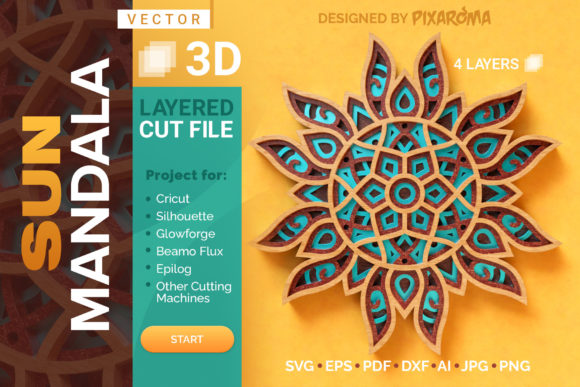
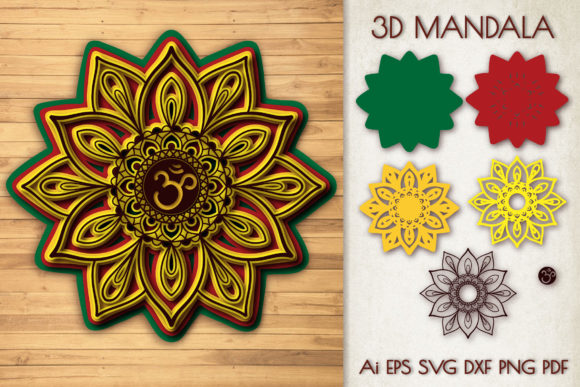
A mandala, derived from Sanskrit meaning "circle," is a spiritual and ritual symbol in Hinduism and Buddhism, representing the universe. In modern design, the term has evolved to describe any symmetrical, circular pattern used for aesthetic purposes. The 3D Festive Mandala takes this classic concept and elevates it through digital layering techniques. By utilizing multiple layers, designers can create depth and shadow effects that mimic three-dimensional structures when printed or cut from physical materials like cardstock, vinyl, or wood.
The "festive" aspect implies a celebratory nature, making these designs perfect for holiday decorations, party backdrops, greeting cards, and scrapbooking. Unlike flat vector graphics, a layered mandala allows for tactile engagement. When you cut out each layer separately and stack them, you create a physical object that catches light and casts shadows, adding a dynamic visual element to any space. This transformation from a digital file to a tangible, dimensional artwork is where the true magic lies.
What’s Inside the ZIP Folder?
When you purchase a digital craft file, you are not just buying an image; you are buying a toolkit. The 3D Festive Mandala package is comprehensive, designed to cater to different user needs and software capabilities. The download comes as a compressed ZIP folder containing two distinct sub-folders:
- The Color Mandala Folder: This contains the full-color version of the design, ideal for direct printing on paper, fabric, or photo paper.
- The Black and White Mandala Folder: This version is optimized for cutting machines. It features clean lines and solid shapes, which are essential for vinyl cutters, laser cutters, and die-cutting machines.
Each of these folders includes a variety of file types, ensuring compatibility across a wide range of devices and software programs. Let’s break down exactly what these files do and why you might need each one.
Decoding the File Formats
Navigating file extensions can be confusing for beginners. Here is a simple guide to the formats included in your download:
SVG (Scalable Vector Graphics)
This is the gold standard for digital cutting. An SVG file is a vector image, meaning it is made up of mathematical paths rather than pixels. You can resize an SVG to any dimension—from a small sticker to a large wall mural—without losing quality. For users of Cricut Design Space, Silhouette Studio, or Brother ScanNCut, the SVG file is your primary resource. It allows the machine to read the precise cuts needed for each layer of the mandala.
PNG (Portable Network Graphics)
PNG files are raster images with transparent backgrounds. The package includes high-resolution PNGs at 8334 x 8334 pixels. This massive resolution ensures that even if you zoom in closely, the edges remain crisp. These files are perfect for digital planners, clipart creation, or direct digital printing where you want to overlay the mandala onto another background without a white box surrounding it.
DXF (Drawing Exchange Format)
If you work with CAD (Computer-Aided Design) software or Autodesk applications, the DXF file is essential. While similar to SVG in its vector nature, DXF is often preferred in engineering and architectural contexts. It allows for precise measurements and integration into larger technical projects.
AI (Adobe Illustrator Artwork)
For professional designers who use Adobe Creative Cloud, the AI file provides the native editable source. You can manipulate individual nodes, change colors, merge layers, or extract specific elements to use in other projects. It offers the highest level of control over the design.
EPS (Encapsulated PostScript)
EPS is a universal vector format compatible with most vector editors, including CorelDRAW and Affinity Designer. If you don’t have Adobe Illustrator but still need to edit the vector paths, EPS is a reliable alternative that preserves the scalability of the design.
PDF (Portable Document Format)
The PDF included serves two purposes. First, it acts as a preview document that can be opened in almost any text editor or viewer. Second, it can be used for direct printing if you prefer not to process the file through cutting software. It retains the layout and structure of the original design.
Software Compatibility and Requirements
One of the biggest advantages of this digital product is its broad compatibility. You do not need expensive, specialized software to get started. The files are optimized for:
- Adobe Illustrator: Industry-standard software for vector editing.
- Cricut Design Space: The free cloud-based platform for Cricut users.
- Inkscape: A powerful, free, open-source vector graphics editor.
- Silhouette Studio: Popular software for Silhouette cutting machines.
- CorelDRAW: A robust vector illustration program widely used in sign-making and industrial design.
This versatility means that whether you are a hobbyist with a basic Cricut Maker or a professional studio using CorelDRAW, you can utilize this mandala effectively. Always ensure your software is updated to the latest version to avoid compatibility issues with newer file structures.
Practical Applications in Modern Creativity
So, what can you actually make with a 3D Festive Mandala? The possibilities are limited only by your imagination and the materials you choose. Here are some practical examples:
Home Decor and Wall Art
Create stunning wall hangings by printing the mandala on heavy cardstock or vinyl, cutting out the layers, and mounting them on a foam board base. The 3D effect adds texture to a room, serving as a focal point in living rooms, bedrooms, or meditation spaces.
Holiday Celebrations
During Christmas, Hanukkah, Diwali, or New Year’s Eve, these mandalas can be used as table centerpieces. Cut them from colored paper or metallic foil, stack the layers, and place them in the center of dining tables. They also work beautifully as window clings when printed on transparency film.
Digital Design Projects
Graphic designers can incorporate the PNG versions into social media posts, website headers, or event invitations. The transparent background allows for easy integration into existing layouts without cluttering the design.
Educational Tools
In classrooms, mandalas are excellent tools for teaching symmetry, geometry, and cultural history. Teachers can print the black-and-white versions for students to color, or use the SVG files to demonstrate how digital tools can replicate traditional art forms.
Quality and Resolution: Why It Matters
The description highlights a resolution of 300 dpi RGB for the raster images. In the printing industry, 300 dots per inch (dpi) is the benchmark for high-quality output. Anything lower may result in pixelation or blurry edges, especially when printing at larger sizes. The RGB color mode ensures that the colors appear vibrant on screens and printers calibrated for standard display.
Furthermore, the emphasis on "high quality and clear lines" is critical for cutting files. Blurry lines in an SVG or DXF file can cause cutting machines to misinterpret the path, resulting in jagged edges or incomplete cuts. This product guarantees sharp, clean vectors, saving you time on post-processing and reducing material waste.
Common Misunderstandings About Digital Files
A frequent misconception among new buyers is that purchasing a digital file grants them commercial rights to resell the item itself. Typically, digital craft licenses allow for the creation of finished physical products to sell (like selling a handmade mandala decoration), but they do not permit the resale of the digital file itself. Always check the specific license agreement provided by Svetlana, the creator, to ensure compliance.
Another assumption is that all "3D" files are complex to assemble. While the 3D Festive Mandala has many layers, the organized folder structure makes assembly straightforward. Each layer is clearly labeled, allowing for a logical stacking order that creates the desired depth effect.
Conclusion
The 3D Festive Mandala is more than just a decorative image; it is a versatile toolkit for creators across various disciplines. From its comprehensive suite of file formats (SVG, PNG, DXF, AI, EPS, PDF) to its compatibility with major software platforms, it is designed to integrate seamlessly into your workflow. Whether you are looking to add a touch of elegance to your home decor, enhance your digital designs, or explore the intersection of traditional art and modern technology, this product offers exceptional value.
Thanks for visiting my store. If you have any questions about usage, file conversion, or creative ideas, please contact me, Svetlana. Happy creating!